Deep Color Mix sweet pea
HOW TO GROW SWEET PEA
Soak seed overnight in warm water before sowing or nick with sandpaper before sowing. Direct seed, 6 weeks before last frost. Or, start indoors 4-6 weeks before planting out. Can also direct sow in early fall. Does best if started in cool conditions. Growth diminishes as the weather warms, is not tolerant of temperatures above 80˚F unless shaded. In USDA zone 7 to 9, the best time to plant is in late October to mid-November. Sow a group of 3 seeds every 6”, when 3” tall, thin to 1 every 6”. Does well in full sun, can also grow in part shade light wood land. Pinch when 6-8" tall to encourage denser branching and more flowers. Collect seed pod when flowers fade, allow pods to dry on plant. Collect to re-sow. Soil pH 7.6–7.8. Hardiness zones 4–10. Annual.
Usual seed life: 3–4 years.
Planting Depth 1”
Soil Temp. Germ. 55–65˚F (13–18˚C)
Days to Germ. 14–21 scarify
Plant Spacing 6-12”
Row Spacing 12”
Days To Maturity 90
Full Sun, Moist Well Drained Soil
Usual seed life: 3–4 years.
Planting Depth 1”
Soil Temp. Germ. 55–65˚F (13–18˚C)
Days to Germ. 14–21 scarify
Plant Spacing 6-12”
Row Spacing 12”
Days To Maturity 90
Full Sun, Moist Well Drained Soil


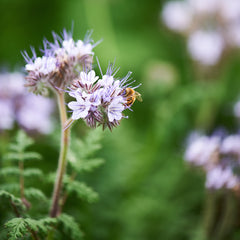
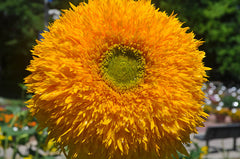

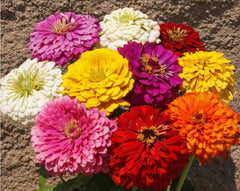
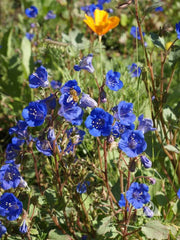

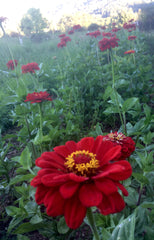
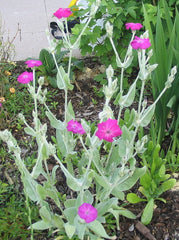
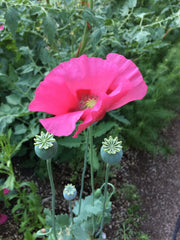


- 50 Seeds$4.10
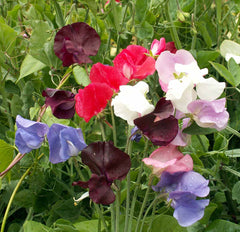
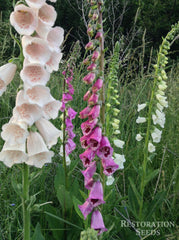
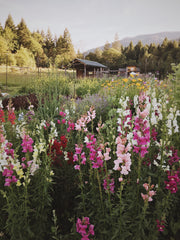
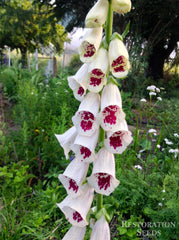
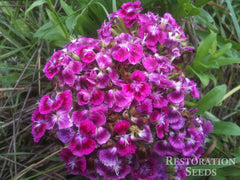
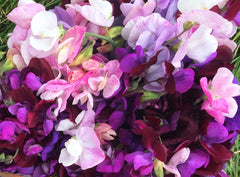
These beautiful sweet pea flowers have a rich mix of burgundy, deep reds, hot pinks, and coral hues, and light pinks. They grow 5-6’ tall and will need to be trellised. Delicious fragrance. Grown by Kimberly Brown in Williams, Oregon. Tags: Season: Spring Fall.
Henry Eckford (1823–1905), a Scottish nurseryman...
Henry Eckford (1823–1905), a Scottish nurseryman...
These beautiful sweet pea flowers have a rich mix of burgundy, deep reds, hot pinks, and coral hues, and light pinks. They grow 5-6’ tall and will need to be trellised. Delicious fragrance. Grown by Kimberly Brown in Williams, Oregon. Tags: Season: Spring Fall.
Henry Eckford (1823–1905), a Scottish nurseryman, cross-bred and developed the sweet pea, turning it from a rather insignificant, if sweetly scented flower, into the floral sensation of the late Victorian era.
His initial success and recognition came while serving as head gardener for the Earl of Radnor, raising new cultivars of pelargoniums and dahlias. In 1870 he went to work for one Dr. Sankey of Sandywell near Gloucester. A member of the Royal Horticultural Society, he was awarded a First Class Certificate, the top award, in 1882 for introducing the sweet pea cultivar 'Bronze Prince', marking the start of association with the flower. In 1888 he set up his development and trial fields for sweet peas in Wem in Shropshire. By 1901, he had introduced a total of 115 cultivars. Eckford was presented with the RHS Victoria Medal of Honor for his work. He died in 1906 but his work was continued, for a time, by his son John Eckford.
More recently, the association between the sweet pea, the Eckfords and Wem has been highlighted again. In the late 1980s, the Sweet Pea Society of Wem started an annual show and the town has again taken the flower to its heart. Many of the street signs now carry a sweet pea motif and an area of the town is known as Eckford Park. There is also a cultivar 'Dorothy Eckford', named after a family member.
Henry Eckford (1823–1905), a Scottish nurseryman, cross-bred and developed the sweet pea, turning it from a rather insignificant, if sweetly scented flower, into the floral sensation of the late Victorian era.
His initial success and recognition came while serving as head gardener for the Earl of Radnor, raising new cultivars of pelargoniums and dahlias. In 1870 he went to work for one Dr. Sankey of Sandywell near Gloucester. A member of the Royal Horticultural Society, he was awarded a First Class Certificate, the top award, in 1882 for introducing the sweet pea cultivar 'Bronze Prince', marking the start of association with the flower. In 1888 he set up his development and trial fields for sweet peas in Wem in Shropshire. By 1901, he had introduced a total of 115 cultivars. Eckford was presented with the RHS Victoria Medal of Honor for his work. He died in 1906 but his work was continued, for a time, by his son John Eckford.
More recently, the association between the sweet pea, the Eckfords and Wem has been highlighted again. In the late 1980s, the Sweet Pea Society of Wem started an annual show and the town has again taken the flower to its heart. Many of the street signs now carry a sweet pea motif and an area of the town is known as Eckford Park. There is also a cultivar 'Dorothy Eckford', named after a family member.
Learn More
Reviews