Wild Bergamot
HOW TO GROW WILD BERQAMOT
Sow seeds in flats, and barely cover them with soil. When the plants have their first true leaves, transplant into individual containers. Transplant outside into the ground when plants are 3-4” tall in late spring or summer (6-8 weeks after starting seeds), 12”-18” apart. Keep the soil moist but avoid overhead watering as plants are susceptible to powdery mildew. Divide the plant every 3 years by replanting new side shoots and composting old center growth. Wild bergamot prefers well-drained but moist sand, loam, clay slightly acidic or calcareous soil. Flowers in its second year. Soil pH 5.1-7.8. Hardiness zones 3-9. Perennial.
Planting Depth surface
Soil Temp. Germ. 60-70
Days to Germ. 7-14
Plant Spacing 12-18”
Row Spacing 12-19”
Days To Maturity 365
Storage Refrigerate
Sun, Part Shade, Moist Well Drained
Planting Depth surface
Soil Temp. Germ. 60-70
Days to Germ. 7-14
Plant Spacing 12-18”
Row Spacing 12-19”
Days To Maturity 365
Storage Refrigerate
Sun, Part Shade, Moist Well Drained

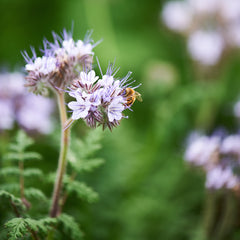

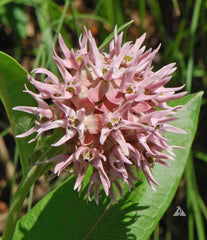
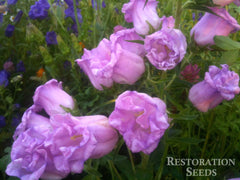
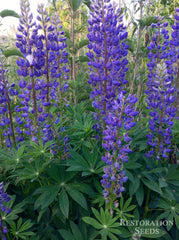



- 50 Seeds$4.10
- 500 Seeds$12.50
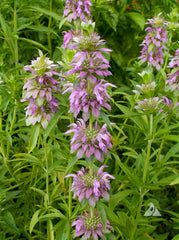
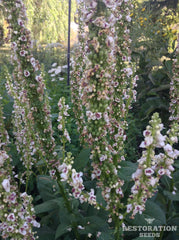
Wild Bergamot is a showy perennial that has clusters of lavender purple flowers. They bloom at the top of 2-5’, open-branched stems. The aromatic leaves make a lovely tea. The flowers are an incredible pollinator attractant, and are especially valuable to grow in the garden to provide food to native bees. The oil fr...
Wild Bergamot is a showy perennial that has clusters of lavender purple flowers. They bloom at the top of 2-5’, open-branched stems. The aromatic leaves make a lovely tea. The flowers are an incredible pollinator attractant, and are especially valuable to grow in the garden to provide food to native bees. The oil from the leaves has traditionally been used to treat respiratory illnesses. Deer resistant. Also known as Bee Balm. Tags: Color: Purple, Specialty: Pollinator Attractant, Season: Summer.
Wild bergamot is found in the US east of the Rockies, eastern Mexico, and southern Canada. It grows it dry open woods, wet meadows and ditches, fields, at the edges of woods, and some marshes in east Texas. Its genus, Monarda, was named about a 16th century Spanish botanist, Nicolas Bautista Monardes. Its species name, fistulosa, means tubular.
Wild bergamot is found in the US east of the Rockies, eastern Mexico, and southern Canada. It grows it dry open woods, wet meadows and ditches, fields, at the edges of woods, and some marshes in east Texas. Its genus, Monarda, was named about a 16th century Spanish botanist, Nicolas Bautista Monardes. Its species name, fistulosa, means tubular.
Learn More
Meet Your Farmer
We promote fair trade, organic practices and environmental responsibility throughout the Restoration Seeds supply chain. Below are the family farmers and seed suppliers who bring our open pollinated seeds to you.
Homestead Culture
Conventional
Seed grower since 2018


Homestead Culture is a small family homestead in Southern Oregon offering seeds for gardening enthusiasts, homesteading and permaculture. We focus on seeds for perennial foods, flowers, herbs and wild plants that offer abundant nourishment and beauty to our gardens, homes and hearts. As busy homesteaders we often look to embrace plants that are reliable, resilient, multi-talented and produce abundantly. It is the seeds from these, our mainstay plants, that we are honored and excited to share with you. We wish you many blessings both in and out of the garden!
Reviews