Rhubarb Supreme
HOW TO GROW CHARD
Start indoors 4-6 weeks before last frost, plant out 2 weeks before frost. For fall harvest, transplant 9 weeks before first frost, without additional protection. In a hoophouse, you can plant 2-3 weeks later. Direct sow in spring when soil temperature is at least 50˚F. prefers cool weather, will tolerate some heat. Thinnings can be eaten as baby greens. Water freely during the season. Harvest leaves by snapping them off close to the ground from several plants rather than stripping one. If there are more leaves than you can use, it is best to pick them to reduce disease and encourage a new steady supply of young leaves. Soil pH 6.1-7.8. Hardiness zones 5. Biennial.
Days from maturity calculated from the date of seeding. Average 2,800 seeds per ounce. Federal germination standard: 65%. Usual seed life: 6 years. Isolation distance for seed saving: 5 miles.
Planting Depth 1/2”
Soil Temp. Germ. 50-75˚F
Days to Germ. 5-14
Plant Spacing 10-18”
Row Spacing 18–24”
Days To Maturity 60
Full Sun, Moist Well Drained
Days from maturity calculated from the date of seeding. Average 2,800 seeds per ounce. Federal germination standard: 65%. Usual seed life: 6 years. Isolation distance for seed saving: 5 miles.
Planting Depth 1/2”
Soil Temp. Germ. 50-75˚F
Days to Germ. 5-14
Plant Spacing 10-18”
Row Spacing 18–24”
Days To Maturity 60
Full Sun, Moist Well Drained



- 100 Seeds$4.10
- 1000 Seeds$18.00
The most bolt-resistant red chard. The long-anticipated result of an on-farm collaborative breeding project between Johnny's breeder Dr. John Navazio, the Organic Seed Alliance, and Nash's Organic Farm in Sequim, WA. This variety was selected for exceptional resistance to bolting, to which red chard is characteristi...
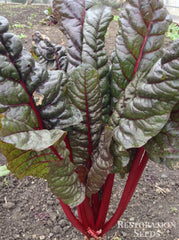
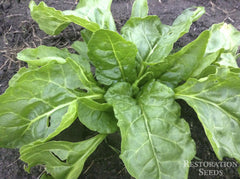
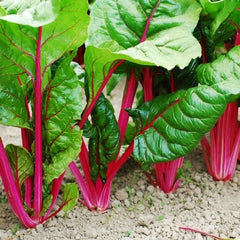
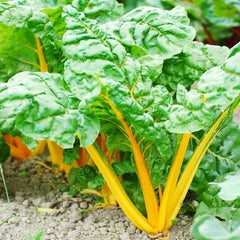
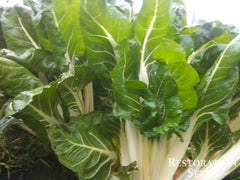
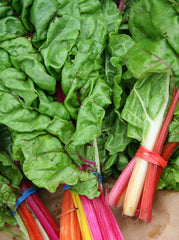
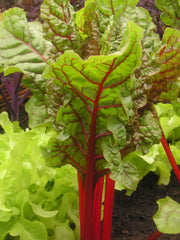
The most bolt-resistant red chard. The long-anticipated result of an on-farm collaborative breeding project between Johnny's breeder Dr. John Navazio, the Organic Seed Alliance, and Nash's Organic Farm in Sequim, WA. This variety was selected for exceptional resistance to bolting, to which red chard is characteristically susceptible. Rhubarb Supreme boasts a beautiful bunch, with wide, rich red petioles and lustrous, dark-green leaves with a deep savoy curl. Best red strain for full-size bunching. Tags: Color: Red, Specialty: Bolt Resistant, Heritage: New Listing, Certification: Organic.
Learn More
Meet Your Farmer
We promote fair trade, organic practices and environmental responsibility throughout the Restoration Seeds supply chain. Below are the family farmers and seed suppliers who bring our open pollinated seeds to you.
Deep Harvest Farm
Certified Organic by WA Dept. of Ag.
Seed grower since 2010


Deep Harvest Farm is a certified-organic vegetable, seed and flower farm on Whidbey Island in NW Washington. Run by Annie Jesperson and Nathaniel Talbot, the farm focuses on year-round vegetable production, taking extra steps to use ecological soil management practices such as minimal tillage, the use of compost and cover cropping.
Reviews