Love Lies Bleeding
HOW TO GROW AMARANTHUS CAUDATUS
Start indoors 6 weeks before last frost, plant out or direct seed after frost. Sow seeds in groups of 4 per plant. Tender annual that does not tolerate frost. If growing for seed, grown in greenhouse in Zone 7B or cooler to avoid early frost. Optimum growing temperatures 60–70˚F. Keep moist until germination. Each plant can carry tens of thousands of flower seeds and it will self-seed very easily. Seeds require light to germinate, press into soil, do not cover. Soil pH 6.1–6.5. Hardiness zones 2-10. Annual.
70%. Usual seed life: 5-10 years. Isolation distance for seed saving: 2 miles.
Planting Depth surface requires light
Soil Temp. Germ. 65-80˚F
Days to Germ. 10–21
Plant Spacing 6-12”
Row Spacing 24-30”
Days To Maturity 100-110
Full Sun, Moist Well Drained
70%. Usual seed life: 5-10 years. Isolation distance for seed saving: 2 miles.
Planting Depth surface requires light
Soil Temp. Germ. 65-80˚F
Days to Germ. 10–21
Plant Spacing 6-12”
Row Spacing 24-30”
Days To Maturity 100-110
Full Sun, Moist Well Drained

- 400 Seeds$4.10
- 4000 Seeds$18.00
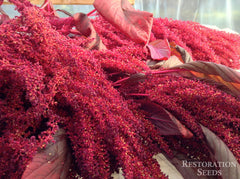
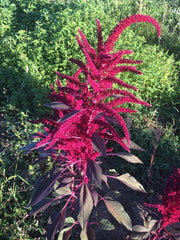
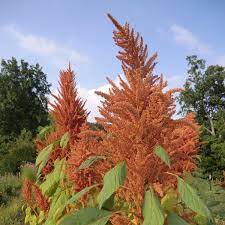
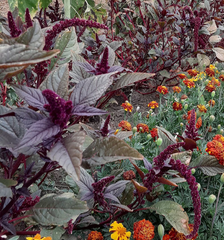
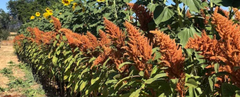
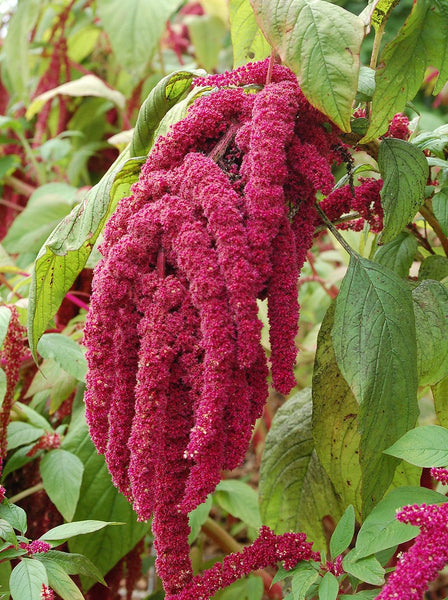
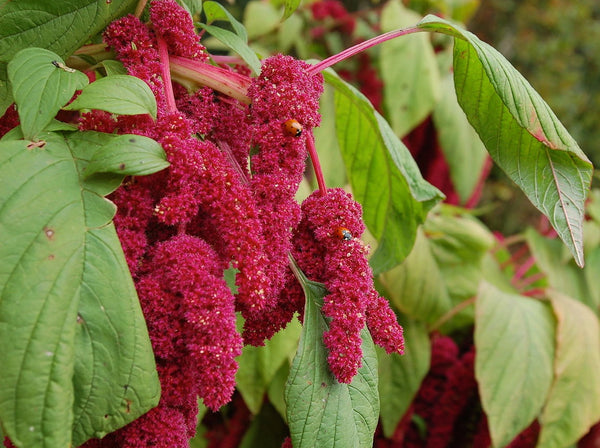
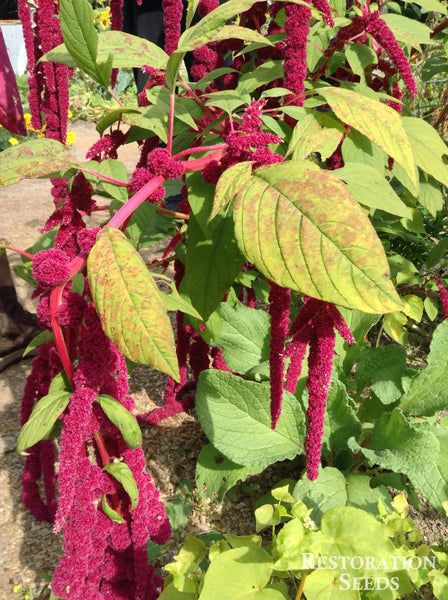
Love Lies Bleeding has elongated red flowers that hang or droop to the ground dramatically. Grown mostly as a ornamental plant, as it blooms all summer. The red color is due to a high content of betacyanins. The foliage is edible. Also known as Pendant Amaranth, Tassel Flower, Velvet Flower, Foxtail Amaranth and Qui...
Love Lies Bleeding has elongated red flowers that hang or droop to the ground dramatically. Grown mostly as a ornamental plant, as it blooms all summer. The red color is due to a high content of betacyanins. The foliage is edible. Also known as Pendant Amaranth, Tassel Flower, Velvet Flower, Foxtail Amaranth and Quilete. Tags: Color: Red, Heritage: Heirloom, Certification: Organic.
Many parts of the plants, including the leaves and seeds, are edible, and are frequently used as a source of food in India and South America where it is the most important Andean species of Amaranthus, known as kiwicha. This species, as with many other of the amaranths, are originally from the American tropics. The exact origin is unknown, as A. caudatus is believed to be a wild Amaranthus hybridus aggregate. Delicious amaranth recipes.
Many parts of the plants, including the leaves and seeds, are edible, and are frequently used as a source of food in India and South America where it is the most important Andean species of Amaranthus, known as kiwicha. This species, as with many other of the amaranths, are originally from the American tropics. The exact origin is unknown, as A. caudatus is believed to be a wild Amaranthus hybridus aggregate. Delicious amaranth recipes.
Learn More
Meet Your Farmer
We promote fair trade, organic practices and environmental responsibility throughout the Restoration Seeds supply chain. Below are the family farmers and seed suppliers who bring our open pollinated seeds to you.
Deep Harvest Farm
Certified Organic by WA Dept. of Ag.
Seed grower since 2010


Deep Harvest Farm is a certified-organic vegetable, seed and flower farm on Whidbey Island in NW Washington. Run by Annie Jesperson and Nathaniel Talbot, the farm focuses on year-round vegetable production, taking extra steps to use ecological soil management practices such as minimal tillage, the use of compost and cover cropping.
Reviews