Italian Heirloom
HOW TO GROW TOMATO
Start indoors 6–8 weeks before last frost, plant out 1–2 weeks after last frost. Requires bottom heat for good germination. Pot up to 3-4” pots when first true leaves develop, bury to first leaves. Gradually harden off in full sun 1–2 weeks before transplanting after last frost. Transplant out stocky 8 to 10” tall plants. Apply super phosphate for high early yields and to avoid blossom-end rot. Too much nitrogen causes excessive vegetation. If fruit cracks, reduce watering. Indeterminate varieties are trellised, fruit ripens over an extended period. Prune to one leader pinching suckers in leaf axles every 7 to 10 days. Thirty days before last frost prune leaders to ripen remaining fruit. Determinate or bush varieties do not need pruning or trellising. Soil pH 4.3-6.6. Hardiness zones 4. Annual.
Days from maturity calculated from the date of transplant. Average 8,400 seeds per ounce. Federal germination standard: 75%. Usual seed life: 4-10 years. Isolation distance for seed saving: 75-150 feet.
Planting Depth 1/4”
Soil Temp. Germ. 70-85˚F
Days to Germ. 6-10
Plant Spacing 24-36”, 14-20”
Row Spacing 5’, 4’ trellis
Days To Maturity 65
Full Sun, Moist Well Drained
Days from maturity calculated from the date of transplant. Average 8,400 seeds per ounce. Federal germination standard: 75%. Usual seed life: 4-10 years. Isolation distance for seed saving: 75-150 feet.
Planting Depth 1/4”
Soil Temp. Germ. 70-85˚F
Days to Germ. 6-10
Plant Spacing 24-36”, 14-20”
Row Spacing 5’, 4’ trellis
Days To Maturity 65
Full Sun, Moist Well Drained




- 25 Seeds$4.10
- 250 Seeds$15.50
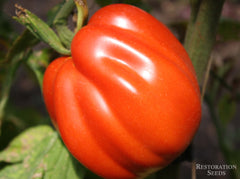
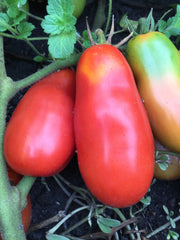
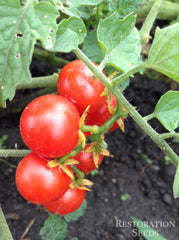
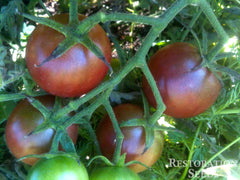
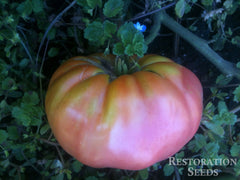
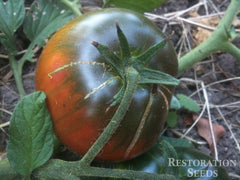
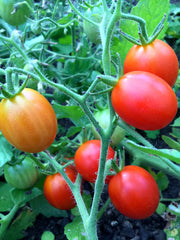
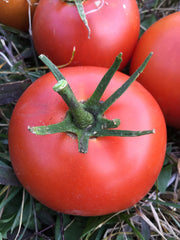
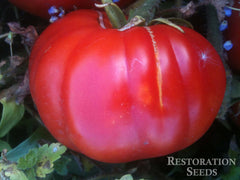
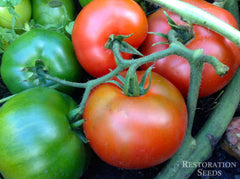
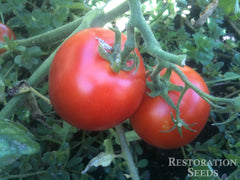
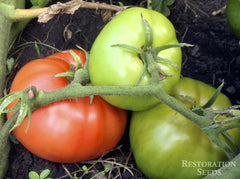
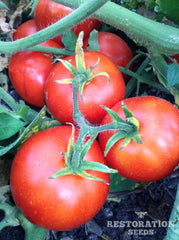
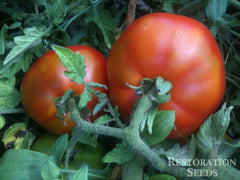
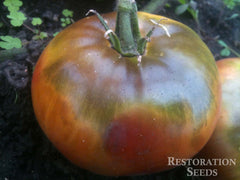
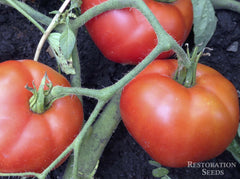
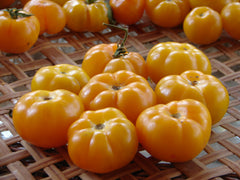
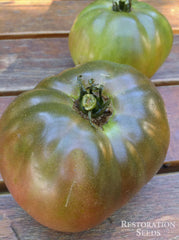
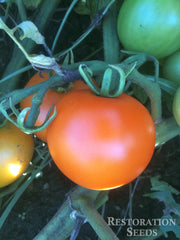
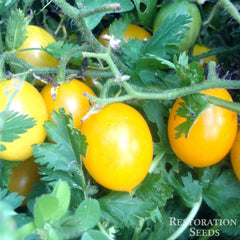
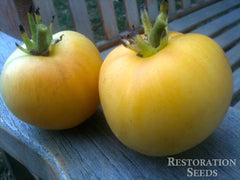
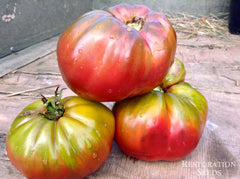
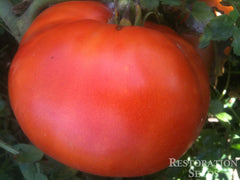
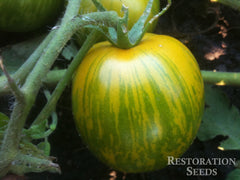
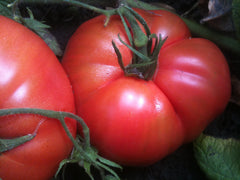
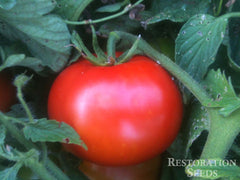
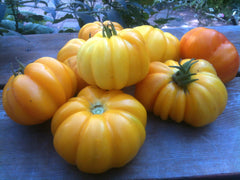
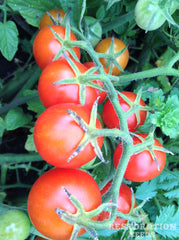
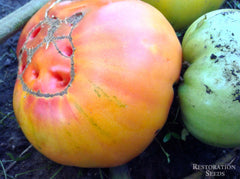
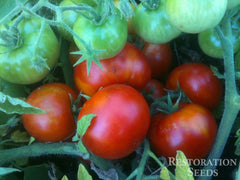
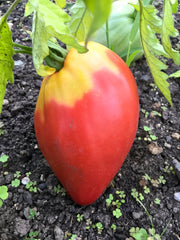
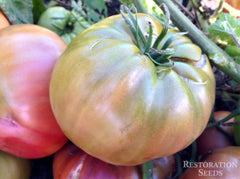
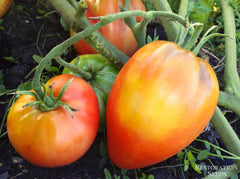
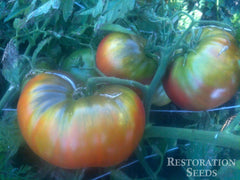
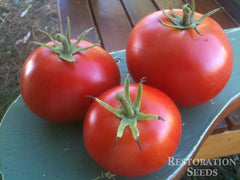
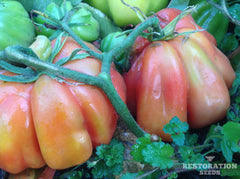
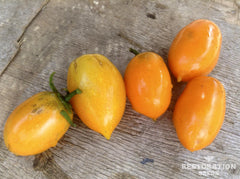
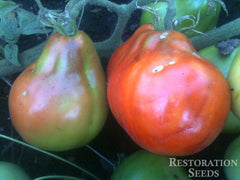
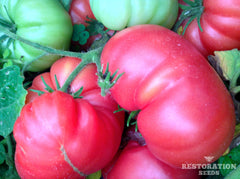
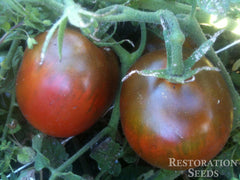
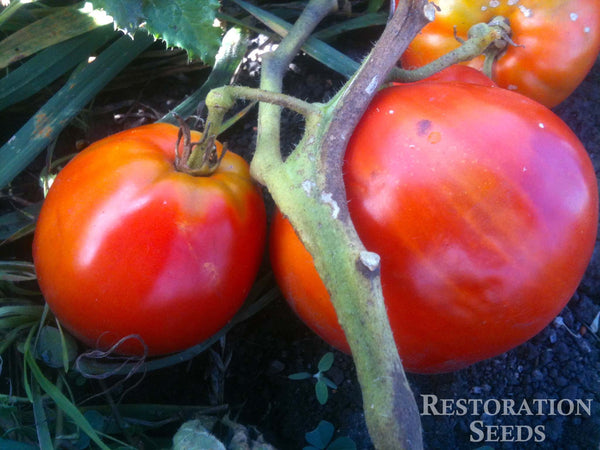
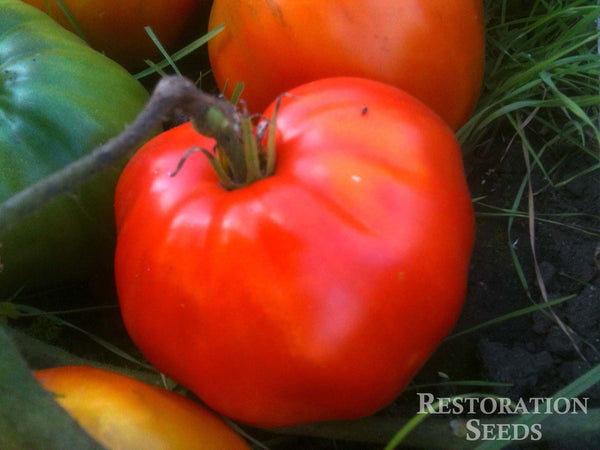
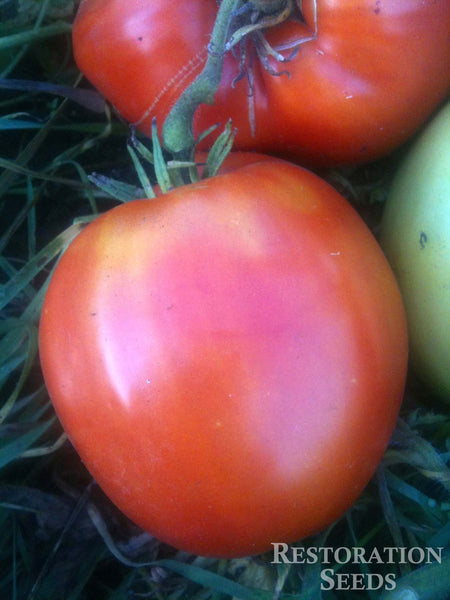
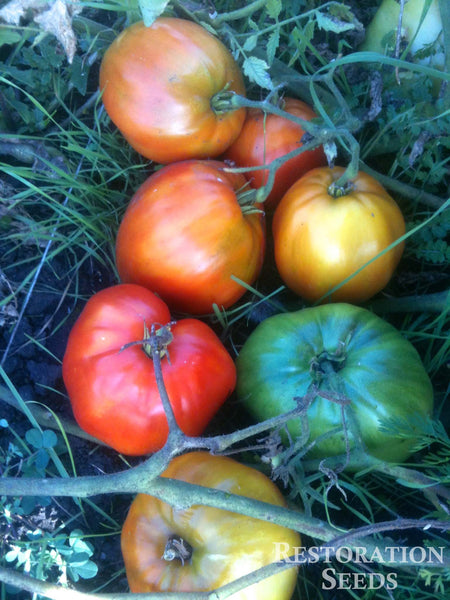
Large, meaty, red round to oxheart 1 lb. fruits. Good fresh slicer and also easy to peel for canning! Tags: Type: Indeterminate, Harvest: Mid, Color: Red, Size: Large, Shape: Round, Specialty: Canner, Season: Summer, Certification: Organic.
Meet Your Farmer
We promote fair trade, organic practices and environmental responsibility throughout the Restoration Seeds supply chain. Below are the family farmers and seed suppliers who bring our open pollinated seeds to you.
Deep Harvest Farm
Certified Organic by WA Dept. of Ag.
Seed grower since 2010


Deep Harvest Farm is a certified-organic vegetable, seed and flower farm on Whidbey Island in NW Washington. Run by Annie Jesperson and Nathaniel Talbot, the farm focuses on year-round vegetable production, taking extra steps to use ecological soil management practices such as minimal tillage, the use of compost and cover cropping.
Reviews